Janez Škrabec - Why would I live someone else’s life? – courage is fear that lasts a minute longer
I am six years old. I remember a carriage ride around Lake Bled. Someone points at the white mansion we are passing. “Škrabec’s villa.” “Who is Škrabec?” I ask. Honestly, I don’t remember the answer. Something vague flickers in my mind about the communist elite and an untouchable man. Recently, I attend a seven-day training course in Bled. By chance, I am staying in a house next to Škrabec’s white residence. It is also the former official residence of another of my interviewees, but let us leave that aside … “The owner of this house is a man I will get to know,” a silly, stubborn conclusion suddenly springs up in me as I walk past the white beauty. But at some point I learned that seemingly senseless flashes are the ones that lead you in the right direction … Less than a week later, someone asks me whether there is anyone specific I would like to interview for my master’s thesis. “Janez Škrabec,” I blurt out. It feels as if it wasn’t me who said it. But fortune favours the brave. Or the foolish? Janez Škrabec has stayed in my memory as the only interviewee who said to me on parting, “Thank you for coming,” and walked me all the way to the door of his building, even though guests were already waiting for him … An interviewee whose aesthetically refined residence and enormous sculptures in the company garden stirred in me a sincere elation I could not hide, even though I usually conceal such things. Excessive fascination with material goods is a sign of a poor upbringing, I was taught. “That is what women who can be bought show. Women you would never take home.”
Like Janez, I too sometimes fight the cruelty of life with humour. And by seeing the world as a comedy, not a tragedy. Janez Škrabec remains in my memory as a businessman who sees life as a game, as he says himself. And despite all the successes behind him, he lives by the principle that “every company is two years away from collapse” and that every empire can crumble to dust … He understands the transience of human glory and power. He never thought himself especially gifted at anything other than opening up opportunities. Prompted by his funding of a wonderful chronicle of Russian literature, the book Natasha’s Dance, we discuss the excess of something in Natasha Rostova, and that excess of ambition that has so often buried people who thought they were “walking on top of the world”. He also strikes me as a man who understands, values and loves the Slavic soul. A man who embodies the ancient ideal that a successful person is more than a financially successful individual.
ALL I REMEMBER IS TOMORROW; WHAT WAS YESTERDAY I NO LONGER KNOW, SO I NEVER THINK THAT I HAVE CREATED ANYTHING EXCEPTIONAL – ON THE DANGER OF ARROGANCE FOR LONG-TERM SUCCESS
MB: You said that you live your mission. That you have managed to build your values into your work, to pass them on to society and to resonate with it through your work. How do you define success, and what are you most proud of in yourself?
JŠ: I never think about what important things, if any, I have achieved that I could be proud of. All I am interested in is tomorrow.
MB: One of my questions is how to prevent an ego trip – thinking you are something more – which is often counterproductive for business. How do you prevent this in yourself? By yesterday not existing for you, by always looking ahead?
JŠ: Well, I am aware that you have to keep your ego firmly in check. I am convinced that the main thing that can destroy you in the long run is arrogance. If you want to be important and successful in the long term, arrogance is very dangerous. Short-term success doesn’t interest me anyway. Success is a marathon. And if you want to run long distances, a healthy balance in life is crucial. You must not sacrifice your personal life and personal relationships, good fitness or health for it. Personally, I try to eat healthily and in a balanced way, to get enough sleep, to exercise, to know how to neutralise stress. But this also has to be well planned. And that is important to me. After all, when I travelled around America, I spent a huge amount of time in libraries and sent piles of books home. That is when I first came across the idea that personal satisfaction also matters for success. Back then, nobody here spoke in those terms yet.
MB: Have you read The 7 Habits of Highly Effective People? There is always time for priorities; the only question is what our priorities are.
JŠ: Whoever tells you they don’t have time for something – it isn’t true. You just aren’t a high enough priority. And that is why it is so important to maintain a healthy balance. What good is work alone if at 80 your body and/or your personal relationships are ruined? Fortunately, I don’t feel at all that anything essential has changed in me over the last 40 years. I have my system and I live by it.
POWER NEVER INTERESTED ME, BUT THE PROBLEM ARISES IF YOU ENJOY POWER – NARCISSISTS ARE, IN THEIR OWN WAY, THE MOST VULNERABLE KIND OF PEOPLE
MB: You said success is a marathon. Research in America has shown that many people enter the top 1% at some point in their lives, but few stay there for ten consecutive years. Is a person who will pass through the sieve of this fluctuation and manage to balance everything born or made? What predispositions are necessary for all-round success?
JŠ: Your environment certainly shapes you. If you are born in Slovenia, you will never become Bill Gates, because Slovenia is too small an environment for such a breakthrough. Nor do I believe it is laid in your cradle that you will one day become Alexander the Great. But I agree that a great deal depends on a healthy and full childhood and a supportive upbringing. Among extremely successful people there are also a great many people with personality disorders; we must be aware of that.
MB: In my master’s thesis I define success as the ability to realise one’s goals, which may, however, have a negative or a positive valence for society.
JŠ: Aha, interesting. Yes, I agree with you. I would add empathy. And the ability to tame your ego and to listen to people. To really listen, rather than preparing what you are going to say.
MB: Narcissists – myself included – are very vulnerable in their own way, more than anyone. But what is, for you, that sudden, extraordinary, subjective factor that makes someone charismatic and that perhaps cannot be fitted into some textbook matrix? Who is a charismatic person for you?
JŠ: The perception of charisma is certainly created by position, status and office. If you met someone who is credited with charisma without their office, I doubt you would perceive it.
MB: I have heard the idea that when a crowd of people perceives someone as exceptional, this energises the person and makes them start to radiate a kind of charisma. Does this idea resonate with you?
JŠ: Crowds don’t interest me; the personal level matters more to me. In life I want relationships between equals. I never want to dominate anyone, I don’t want to compete with anyone; I constantly seek and strive for partnership. I don’t much like people who want to subordinate themselves to me, to please me. Perhaps that suits some, but I like reasoned criticism and open conversations.
YOU ALONE ARE TO BLAME FOR EVERYTHING, AND SUFFERING IS NO VIRTUE TO ME – I DO DEALS, OPEN MUSEUMS, CREATE OPPORTUNITIES AND MAKE SURE THAT I AND THE PEOPLE CONNECTED WITH ME HAVE A GOOD TIME
MB: Then you don’t fit the model of the narcissistic leader.
JŠ: Well, you know, sometimes I do. But what matters is that you constantly cultivate yourself, regulate or humanise your own narcissism. And that is a process. All relationships, all things in this world must be nurtured, and that is constant work that you never finish. I was very fascinated by the fact that if no one tended the trees and shrubs in London for five years, it would become a jungle. That fast! I also find it very healthy not to take anything too seriously. Look at the world as a game, Shakespeare already advised, and decide whether it is to be a comedy or a tragedy. Those of us who see it as a comedy have it easier. If you have a good sense of humour, you also have a healthy distance from yourself and never see yourself as a victim. I really don’t like that. Even if I ever was one, I will not look at it from a victim’s point of view. I know that everything is in my own hands and that I alone bear the responsibility if I ever fail.
MB: That is what I was always taught. You alone are to blame for everything. If someone leads you up the garden path in business, you chose that person yourself. You went to them, you worked with them. You said you did not crave power, nor victory over others. What, then, was your ambition?
JŠ: I wanted to be an entrepreneur. Even though in those days it was not the most popular paradigm, I was drawn to entrepreneurship and, with it, the possibility of creating opportunities and independently creating added value, agility, a free approach, responsiveness ... Today this is my primary life orientation, my drive and my lifestyle, which allows me to grow and develop, and allows the company and the people connected with it to develop too. This, of course, is not possible without cultivating a broader view of the world, and it is precisely the lifestyle I have shaped for myself that makes this possible: meeting interesting people, getting to know cultures, reading a lot, going to cultural and artistic events ... All of this truly fulfils me, and I enjoy it all. It is very important that you also enjoy what you do and how you do it. Then every success is worth more and every defeat is easier to overcome. I want to have a good, fulfilled time, and at the same time make sure that the people connected with me have a good and full life.
MB: And that it is a comedy, not a tragedy.
JŠ: Of course.
THE WHEEL OF FORTUNE ALWAYS TURNS: IT IS BEST TO BE AWARE OF THIS TRANSIENCE AND TRY TO PREVENT IT AT EVERY LEVEL – I HAVE SEEN A LOT OF GRABBING AT COMPANY TAKEOVERS; YOU HAVE TO KNOW HOW TO KEEP GREED AND FEAR IN CHECK
MB: Where do you draw your will to live from, your basic motivation to start new projects, open up new opportunities?
JŠ: How mistaken many people are in believing that we entrepreneurs crave profit. We are simply afraid of losing what we have. And then, out of this survival fear, we work like mad to keep what we have, because we know how easy it is to lose everything. That is also how we increase profit and develop new opportunities. Honestly, on the 5th of every month I feel real relief when I can pay all the salaries. It has been like that for 30 years. But in the process I grow, I develop. So not on the basis of successes, but because of fear.
MB: The wheel of fortune always turns.
JŠ: I know that.
MB: How does one cope psychologically with this transience of position, status and power?
JŠ: Mmmm … Well, it is best to be aware of transience and try to prevent it at every level. Bill Gates said that every company is two years away from collapse. And that is true; I am old enough to have seen many such collapses caused by excessive greed. And if fear and greed are the biggest drivers of what we do, I am motivated more by fear.
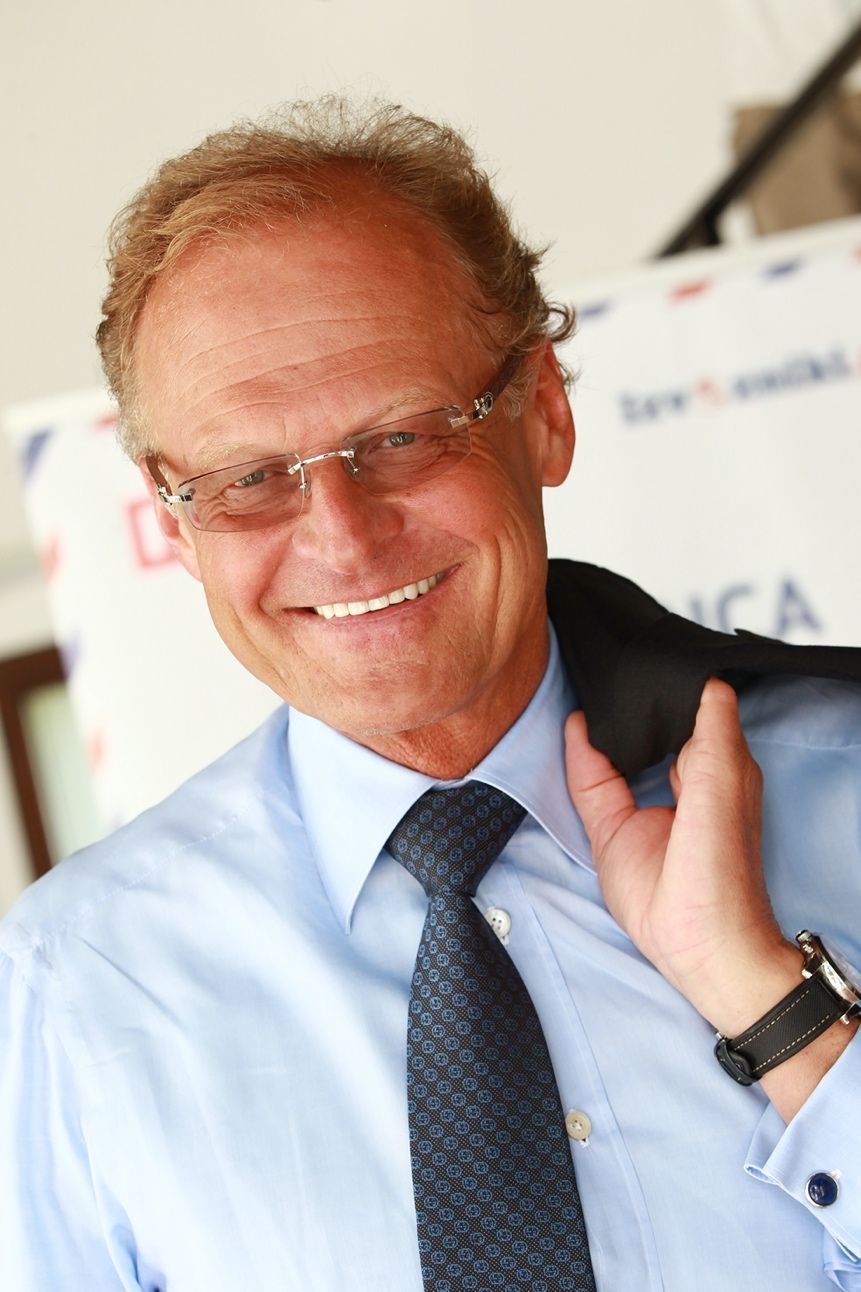
EVERY DAY YOU HAVE TO WORK AS IF YOU WERE TWO YEARS AWAY FROM BANKRUPTCY – JUST AS “EVERY COMPANY IS TWO YEARS AWAY FROM COLLAPSE”
MB: I was with one interviewee and asked him whether he is afraid that every empire can crumble to dust. And he told me no – I can lose 40 million and still be fine, what could possibly collapse for me? And I thought … I won’t judge, I don’t know him and I don’t interfere, but you know – does he know what empires have crumbled to dust?
JŠ: Exactly. Every day you have to work as if you were two years away from the abyss. And you are.
MB: When making decisions and entering into projects, what would you say guided you more: strategic analysis or intuition? And what does intuition actually mean to you?
JŠ: I believe in knowledge and experience. Whenever anyone asks me why I am successful, I answer that it is because I evidently make good decisions. But all the good decisions I make today, I make because I made so many wrong ones before. That’s it – you have to go through many experiments. Just as in the natural sciences: how do chemists and pharmacists research medicines, get results, arrive at inventions? By repeating experiments. Only a thousand failed attempts lead you to the right formula. In the natural sciences this is acceptable, highly desirable, yet in life or in business we are so unforgiving of mistakes. That is why I am very lenient towards mistakes and wrong decisions, because I know they are a down payment on success.
ONLY THOUSANDS OF FAILED EXPERIMENTS LEAD YOU TO THE RIGHT FORMULA: I DON’T REMEMBER ALL MY MISTAKES, BUT THEY LIVE IN ME AND GUIDE EVERY DECISION I MAKE; THEY SHAPE MY INTUITION
MB: My next question is precisely about leadership and mistakes. Do mistakes count? Do you remember your worst mistakes? Do you think a leader in a high-stakes game can remain human, or is there no room for mistakes?
JŠ: Mistakes deserve punishment only if we are indifferent to them. But if they are a training ground for learning, they are very welcome. As I have already stressed, I remember neither great, noteworthy successes nor mistakes. But everything lives on in me. Like the books you have read, or yesterday’s dinner. Do you remember what you had for dinner? I don’t, but I am stronger for new challenges today because of it. So my mistakes of yesterday, which I have forgotten, were the precondition for my sitting here in front of you today.
MB: And also the precondition for your intuition.
JŠ: Yes, everything settles somewhere inside you. I would add one more important thing that I realised while watching Miloš Forman’s cult film Amadeus. Mozart was truly a genius; his works are the canon of classical music, and we all still enjoy listening to his Marriage of Figaro or The Magic Flute. But as the film also shows, he perfected his musical creativity, while on every other level he was completely infantile. That kind of genius does not interest me at all; we must develop as whole people.
MB: Just as autistic people sometimes develop selectively and are brilliant only in certain areas …
JŠ: Many would choose that – develop one area to perfection, subordinate everything to it and even sacrifice a great deal for it. Such people are often tragic figures. I am simply not like that; I want to live well, with quality, and above all a complete and fulfilled life.
YOU CANNOT EXPECT EVERY ONE OF YOUR DAYS TO BE BALANCED, BUT IT IS EXTREMELY IMPORTANT TO PLAN YOUR TIME OVER THE MEDIUM TERM SO THAT YOU TAKE CARE OF EVERY DIMENSION OF YOUR BEING AND POTENTIAL
MB: Well, Janez, if you want to live well – earlier you mentioned that a day still has only 24 hours. How do you allocate your time, how do you set priorities, how do you keep all aspects of your life and being in balance?
JŠ: Medium-term planning matters more to me than short-term planning. You must not expect yourself to strike a good balance every single day. That is illusory. The only sensible thing, I think, is to measure it on a monthly, or even yearly, basis. Holidays are also very important to me; they are an investment in my good condition going forward. That is why on holiday I eat even more healthily, read more, do even more sport and sleep more. I can’t even imagine wasting this precious time partying all night. But I know many such cases. I recently spent four days in Dubai. When I am there, I feel no need at all to socialise with anyone. I sleep a lot, read, go for massages, walk a lot and eat well. A truly high-quality reset. And I was completely stress-free – the app confirmed it too.
WE HUMANS FEAR THE UNKNOWN
MB: Speaking of different ways of achieving goals: walking over dead bodies, doing whatever it takes to achieve one’s own or collective goals – what is your attitude to that?
JŠ: It is certainly one of the ways, but I don’t use it. As I stressed, I run long distances. Besides, it is in our nature – unfortunately – to judge ourselves by our ideals and others by their actions. We are all flesh and blood, so it is advisable to keep a critical distance from ourselves too. To judge not only others by their actions, but also ourselves, with an honest approach. For me, cooperation is a value, not exclusion. When I look at the approaches the Chinese take, it gives me food for thought. Despite the fear of them that prevails here in the West, they surprise me positively. Chinese culture is an exceptionally old and extremely successful civilisation, and also a superpower. They see the nation as a collective, unlike us, who see a nation more as a sum of individuals. And if you see the nation as a collective, success is measured in centuries. But if you put individualism on a pedestal, as we in the West do, success has to be achieved within, say, 80 years. Let me share an experience that left a deep impression on me. In 2014 I was at the Olympic Games in Sochi. The only major world leader at the opening was the Chinese president. I watched an interview with him on television; the Russian journalist conducting it flattered him, saying how nice it was that he had attended this ceremonial event. How did Xi Jinping respond? He said he was very glad to have finally come to Sochi, the city where Ostrovsky wrote the novel How the Steel Was Tempered, and to have finally seen the mountain where Zeus chained Prometheus, and where an eagle came every day to peck at his liver. What modesty, I thought. He is the representative of an exceptionally old civilisation and an important world superpower, and he paid such respectful tribute to the city of Sochi. And when he visited Serbia, he was equally respectful towards the host country. The Serbian president told him that there was a prophecy in Europe that in the 21st century a yellow man on a camel would come to Europe and the camel would drink water from the Danube. The metaphor is clear. The Chinese president replied that he would like them to come to China, and that they would drink water from their rivers together. And one more thing – the Chinese have the largest investment in Slovenia, but do you see them anywhere? No.
MB: And yet we are afraid of them.
JŠ: What are we actually afraid of? The unknown. American culture, with Hollywood as the generator of Western values, is much closer to us than China, and easier for us to understand.
MB: Do you have some outlet for relaxing? You have one too – but perhaps a healthier one.
JŠ: When I came back from Dubai, I went to bed at six and slept until seven in the morning. But how good I was the next day! It pays off. A long-term investment in yourself. It really pays to invest in yourself, in your well-being, over the long term.
MB: I was told that you really hate economy class on planes, haha.
JŠ: I travel in the best class, if possible.
MB: I think that is also a healthy love of oneself. Many people in Slovenia are afraid of a high standard of living, even if they have the means for it. What would you say about the importance of social and emotional intelligence in business and in building partnerships and trust, including with often demanding, complex characters? How do you build that?
JŠ: With trust and respect. And sincerely. And you build that by liking people. And if you cultivate respect for people, you stand by the word you have given, you keep agreements and promises, and you don’t run from responsibility. What is this gentlemanliness? That even if you see that something is going against you, you keep your promise. And if you make a mistake, you admit it. That you have at least some integrity. And by no means do I think that I have always acted in the best way; I have sometimes betrayed my own ideals too. But – we are not angels. Nor do I look for a saintly halo around anyone. I allow everyone to take their own detours now and then. But in the long run, an agreement, a promise, must hold. That is how I build trust and respect.
I COPE WITH PRESSURE BY CONSTANTLY PLAYING OUT SITUATIONS IN MY HEAD – BUT IN REALITY, MOST OF THE THINGS WE FEAR NEVER TURN OUT AS BADLY AS WE IMAGINE
MB: What about loneliness and the psychological pressures of life at the top? How often do you seek advice? How do you cope with the weight of responsibility you carry? You said that to some extent you try to share it with other members of your team, but you still carry a certain amount yourself. How do you live with that?
JŠ: How do I live with it? I constantly play out situations so that I can more easily foresee the consequences that might arise and prepare for them. In our heads we carry a whole heap of negative consequences that we never actually face; we also see far more misfortunes than we could ever actually experience.
MB: I think it was Mark Twain who said that 99% of the things we fear never happen. We should look for danger where we are not afraid.
JŠ: Yes, bravo, I agree with you. There is one more thing you must be aware of when building a business story: that everything has already been done before you. The most promising thing is to build on what has already been done and turn your predecessors’ legacy to your advantage. I don’t feel at all that I am doing anything new. I am continuing on foundations that others laid before me. It seems to me very unpromising, even a little conceited, to disregard everything achieved before us. History knows some flagrant attempts – Jean-Bédel Bokassa, president and later emperor of the Central African Republic, then the Central African Empire, named months after himself to emphasise his personal greatness. Of course, it didn’t work. Just as the French Revolution’s attempt to introduce a new calendar and a new count of years didn’t work.
MB: When, as a leader, you had to step forward or win new business, where did you draw your self-confidence from? What were its pillars?
JŠ: My self-confidence rests on the realisation that I am nothing special at all – and neither are you. That is a psychologically healthy position.
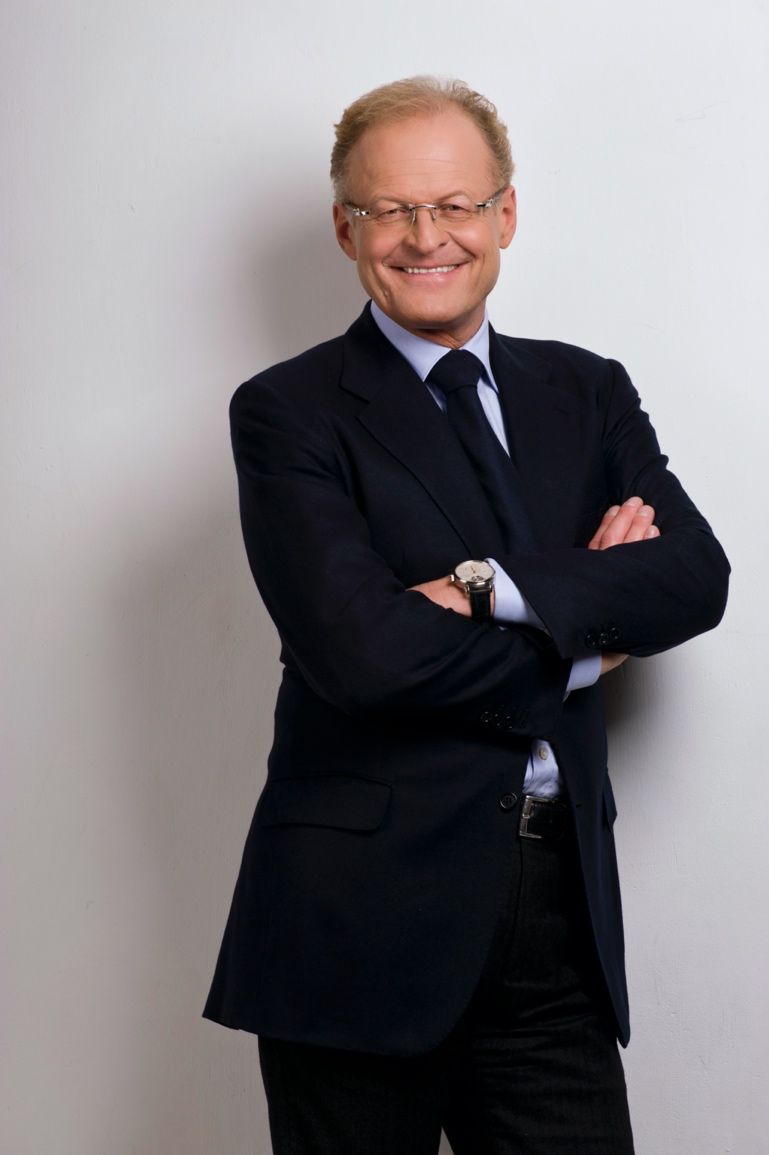
THOSE WHO SUCCEED ARE THOSE WHO PERSEVERE EVEN WHEN THEY ARE AFRAID – THOSE WHO PERSEVERE ONE MINUTE LONGER
MB: Do you believe that a certain authenticity is key for a leader – that, to some extent, they still live what they are? How do you view this discourse, this debate?
JŠ: Oh, we all wear masks anyway. Some of us live under a bigger mask, others under a smaller one.
MB: The President of the GZS told me that for years his employees did not know he was going through a divorce and so on. T hat a leader in a crisis must not show that he is afraid, because then everything goes downhill.
JŠ: Do you know what courage is?
MB: What is courage?
JŠ: Fear that lasts one minute longer. Who succeeds? The one who perseveres one minute longer. The one who perseveres even when afraid. Every success story is also a story of discouragement, fear, failed attempts … Fitzgerald was absolutely right when he said: show me a hero and I will write you a tragedy.
MB: They say everyone fears the tiger because it is so frightened inside that it looks frightening.
JŠ: I have honestly never been in a situation where I had to show my courage. Probably because I am not even aware of certain fears, because I am guided by optimism or by trust that everything will be fine. On planes I don’t even notice turbulence, because I completely trust the crew to get me safely to my destination.
MB: The things you have no influence over – why bother with them? Better to save your energy for those where you need to have an influence.
JŠ: Yes, bravo. Try to influence as much as possible the things you can influence. You know the prayer of St Francis: O God, give me the strength to accept what I cannot change. Give me the courage to change what I can change, and give me the wisdom to tell the two apart. How simple, isn’t it? I really don’t want to waste energy on things I have no influence over.
MB: I think that is a form of escape.
JŠ: Escape from what we ought to be doing. We all procrastinate a little; we put off the harder things until “tomorrow”, but sooner or later we have to face them too. I really don’t want to run away from anything, especially as I think I was born in the best place and at the best time.
PURSUE YOUR OWN HAPPINESS, YOUR OWN IKIGAI, AND DON’T COMPARE YOURSELF TOO MUCH WITH OTHERS – “YOU HAVE TO DO IT YOUR OWN WAY”
MB: I have seen a lot of the world, but Slovenia seems to me the most beautiful place to live. How important is it for a leader to know who they are, how they think, what they want in life? To be aware of the context, the spirit of the times? What more would you say about the importance of self-knowledge and of a mindful awareness of context, society and one’s surroundings?
JŠ: The more you know, the more you are worth. The better you know the spirit of the times, the “big picture” and yourself, the stronger your position. I am very fond of a quote by a certain writer. And of being able to take a healthy distance from everything, including yourself. The Turkish writer Ece Temelkuran wrote an exceptionally beautiful dedication to her parents in her book. She wrote: I dedicate this book to my parents, who taught me to love the Balkans without being ashamed of them or admiring them too much. And for me this is the most beautiful advice – to have a balanced approach to everything, to be neither overly euphoric nor apathetic, and to be able, within this balance, to still truly love people and things. I have the same attitude towards authorities; they neither attract nor frighten me. There is no one I particularly wish to meet. If I share some interest with someone, that is another matter. I want contacts based on particular interests, shared pursuits and common visions, not on something abstract.
MB: Zlobec’s quote fits nicely with what you said: I do not celebrate my victories; defeated, I do not surrender. With this reining in of one’s own euphoria. But I think an important message for future generations, distilled from what you said, is that you will be successful if you live as yourself, realise your own life path, your own lifestyle, rather than imitate others.
JŠ: Yes. You have to do it your own way. We are all unique. You mustn’t compare yourself too much with others. Pursue your own happiness. Your own ikigai. Why would you live someone else’s life?
This interview was conducted as part of my master’s thesis, now at the defence stage, Psychological Patterns of Exceptional Success in the Slovenian Economic and Political Arena. The full version will be published in the forthcoming commemorative publication The Dark and Bright Side of “Ruling” the World: Insights of Slovenian Leaders into the Psychology of Breaking Through and Staying at the Top, which will most likely be published under the auspices of Katapult and with the mentorship of Petra Škarja by the end of this year.
Photo source: RIKO archive